intermatic st01 instruction manual
Intermatic ST01 Instruction Manual: A Comprehensive Guide
This guide offers detailed instructions for installing‚ programming‚ operating‚ and maintaining Intermatic ST01‚ ST01K‚ and E1600 series in-wall timers effectively.
The Intermatic ST01 is a versatile 24-hour in-wall timer designed for automating a wide range of electrical devices based on pre-set schedules. This timer provides convenient control over lighting‚ appliances‚ and other electrical loads‚ enhancing energy efficiency and security. It’s a self-adjusting wall switch timer‚ offering easy setup and operation.
This timer features multiple functions‚ including adjustable on/off schedules‚ override capabilities‚ and various operational modes like timer‚ random‚ on‚ off‚ and dusk-to-dawn. The ST01 series – encompassing ST01‚ ST01K‚ and E1600 models – offers reliable performance and user-friendly programming. Understanding its features allows for optimized control and automation within your home or business environment.
Understanding the ST01 Series (ST01‚ ST01K‚ E1600)
The Intermatic ST01 series includes three closely related models: ST01‚ ST01K‚ and E1600. While sharing core functionality as 24-hour in-wall timers‚ subtle differences exist. The ST01 is the standard model‚ offering comprehensive programming capabilities. The ST01K often includes kit components for specific applications‚ potentially differing in included hardware.
The E1600 is essentially a rebranded version of the ST01‚ maintaining identical operational features and programming logic. All models support a 24-hour programming cycle‚ allowing for precise control of on/off schedules. They are designed for internal wall mounting and are compatible with standard electrical boxes‚ ensuring seamless integration into existing setups. Understanding these nuances helps select the appropriate model for your needs.
Key Features and Benefits

The Intermatic ST01 timer boasts several key features enhancing convenience and energy savings. Its 24-hour programming cycle allows for highly customized on/off schedules‚ automating lighting and appliances. Operational modes include Timer‚ Random‚ ON‚ OFF‚ and Dusk-to-Dawn‚ providing versatile control options. The HOLD function offers temporary override for schedules‚ while memory clearing resets settings.
Benefits include reduced energy consumption through automated control‚ enhanced security via random mode simulating occupancy‚ and simplified lighting management with dusk-to-dawn functionality. Installation is straightforward‚ and the timer supports anchor lengths from 20-120mm for secure mounting. It’s a reliable solution for automating electrical devices efficiently.

Installation Procedures
Proper installation requires safety precautions‚ correct tools‚ and careful wiring. Secure mounting to the wall‚ considering anchor length‚ ensures stable and reliable timer operation.
Safety Precautions Before Installation
Before commencing installation‚ always disconnect power to the circuit at the breaker or fuse box to prevent electrical shock. Verify the power is off using a non-contact voltage tester. This timer is designed for general-purpose electrical control and should only be installed by individuals familiar with electrical wiring and safety procedures.
Ensure compliance with all applicable local electrical codes and regulations. Do not install the timer in damp or wet locations. Avoid using excessive force during installation‚ as this could damage the timer or wiring. If you are unsure about any aspect of the installation process‚ consult a qualified electrician. Improper installation can create a fire hazard or electrical shock risk. Always double-check wiring connections before restoring power.
Required Tools and Materials
For a successful installation‚ you will need several tools and materials. Essential tools include a screwdriver (Phillips and flathead)‚ wire strippers‚ pliers‚ and a non-contact voltage tester. A drill with appropriate drill bits is necessary for mounting the timer to the wall‚ along with suitable wall anchors – considering anchor lengths from 20-120mm depending on the wall material.
Materials required encompass the Intermatic ST01 timer itself‚ appropriately sized electrical wire (matching existing circuit wiring)‚ wire connectors (wire nuts)‚ and electrical tape. Safety glasses are recommended. Ensure you have a level to guarantee straight mounting. Having a flashlight can be helpful in dimly lit areas.
Wiring Diagram and Connections
Carefully disconnect power at the circuit breaker before commencing any wiring. The Intermatic ST01 typically features terminals for Line (Hot)‚ Neutral‚ Load‚ and sometimes a Ground connection. Connect the incoming hot wire to the ‘Line’ terminal‚ the neutral wire to the ‘Neutral’ terminal‚ and the wire leading to the controlled device to the ‘Load’ terminal.
Ensure secure connections using wire connectors‚ and wrap with electrical tape for added safety. A ground wire‚ if present‚ should be connected to the designated ground terminal. Always double-check the wiring against the specific diagram included with your ST01 model‚ as configurations can vary slightly. Incorrect wiring can damage the timer or create a safety hazard.
Mounting the Timer to the Wall
After wiring‚ carefully position the timer into the electrical box. Secure it using appropriate screws‚ ensuring it sits flush against the wall. Consider the anchor length – ranging from 20 to 120mm – based on the wall material (concrete or brick are ideal).
Use suitable anchors for a firm hold‚ preventing the timer from shifting. Ensure the timer is level before fully tightening the screws. Avoid over-tightening‚ which could crack the timer’s housing. A properly mounted timer is crucial for stable operation and a neat appearance. Double-check stability before restoring power.
Anchor Length Considerations (20-120mm)
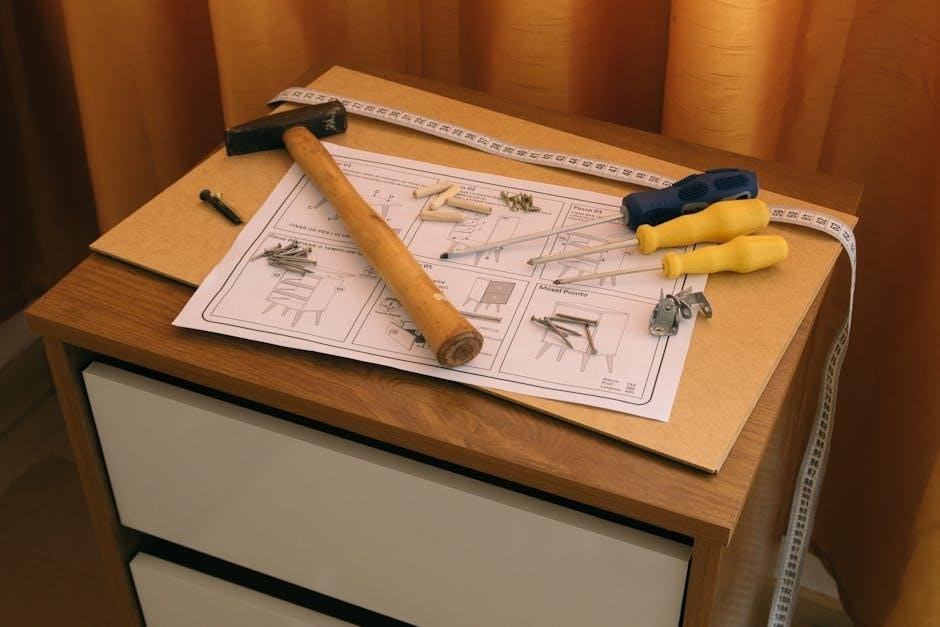
Selecting the correct anchor length is vital for secure timer mounting; The Intermatic ST01 accommodates anchors from 20mm to 120mm‚ catering to various wall depths and materials. For solid concrete or brick‚ a shorter anchor (20-50mm) may suffice‚ providing sufficient grip.
However‚ for drywall or hollow walls‚ a longer anchor (80-120mm) is recommended to reach a stud or utilize a toggle bolt for enhanced stability. Insufficient anchor length can lead to a loose timer‚ potentially causing wiring issues or damage. Always prioritize a secure and stable installation.

Programming the Intermatic ST01
The ST01 timer allows automated control of electrical devices via a pre-set schedule‚ including setting time‚ date‚ on/off times‚ and utilizing override functions.
Setting the Current Time and Date
Accurate time and date settings are crucial for the Intermatic ST01 timer’s proper function. Begin by pressing the “MODE” button until you reach the time setting screen. Use the “HOUR” and “MIN” buttons to adjust the current hour and minute. Ensure you observe the AM/PM indicator‚ if applicable‚ for correct time representation.
Next‚ navigate to the date setting using the “MODE” button. Utilize the “DAY‚” “MONTH‚” and “YEAR” buttons to input the correct date. Confirm each selection by pressing the “MODE” button to proceed. Double-check the displayed time and date for accuracy before finalizing. Incorrect settings will lead to scheduling errors‚ impacting the automated operation of connected devices. Proper setup ensures reliable performance.
Understanding the 24-Hour Programming Cycle
The Intermatic ST01 utilizes a 24-hour programming cycle‚ meaning a full day is divided into 24 distinct hourly segments for scheduling. This system allows for precise control over when connected devices turn on or off throughout the entire day. Programming involves setting specific start times for “ON” periods and corresponding end times for “OFF” periods.
Each day can be individually programmed‚ or settings can be copied to multiple days for convenience. Understanding this cycle is vital for creating effective schedules. Consider daily routines and desired automation levels when setting programs. The timer operates continuously‚ repeating the programmed schedule daily unless altered or overridden.
Programming On/Off Schedules
To program on/off schedules‚ first‚ ensure the current time and date are correctly set. Access the programming mode using the timer’s buttons – consult the manual for specific button combinations. Then‚ define each “ON” time by specifying the hour and minute when you want the device to activate. Subsequently‚ set the corresponding “OFF” time‚ indicating when the device should turn off.
Repeat this process for each desired on/off cycle within the 24-hour period. You can program multiple events per day. Remember to save your settings after completing the schedule. The ST01 allows for different schedules for each day of the week‚ offering flexibility.
Using the Override (HOLD) Function
The HOLD function temporarily overrides the programmed schedule‚ maintaining either an “ON” or “OFF” state until manually cancelled. To activate HOLD‚ press and hold the timer button for over two seconds; the LED indicator will illuminate‚ confirming activation. While in HOLD mode‚ the programmed schedule is suspended‚ providing continuous power or cutoff as selected.
This feature is useful for situations requiring temporary adjustments to the regular schedule‚ such as extended daylight or unexpected events. To return to the normal programmed operation‚ simply press the same button again‚ deactivating HOLD and restoring the scheduled cycles.
Clearing the Timer Memory
Resetting the Intermatic ST01 to its factory default settings erases all programmed schedules and user preferences. This is useful when re-purposing the timer or troubleshooting persistent issues. While a specific reset procedure isn’t explicitly detailed in readily available documentation‚ a complete power cycle – disconnecting the timer from its power source for an extended period – often achieves this.
Alternatively‚ repeatedly attempting to reprogram the timer with conflicting settings may also lead to memory clearing. However‚ this method is less reliable. Always consult the full instruction manual for the most accurate and recommended procedure for your specific ST01 model.

Operational Modes
The Intermatic ST01 features five distinct modes: Timer‚ Random‚ ON‚ OFF‚ and Dusk-to-Dawn‚ providing versatile control over connected lighting or devices.
Timer Mode: Scheduled Operation
Timer Mode is the core functionality of the Intermatic ST01‚ enabling automated control based on a pre-programmed schedule. This mode allows users to define specific on and off times for each day of the week‚ creating a customized lighting or appliance control plan. The timer operates on a 24-hour cycle‚ providing flexibility in scheduling.
To utilize Timer Mode‚ the current time and date must be accurately set. Subsequently‚ users can program multiple on/off events throughout the day. The ST01 remembers these settings even during power outages‚ ensuring consistent operation. This mode is ideal for energy conservation‚ security‚ and convenience‚ automating tasks like turning lights on at dusk and off at dawn‚ or controlling other electrical devices according to a set routine.
Random Mode: Security Simulation
Random Mode on the Intermatic ST01 provides a valuable security feature by simulating occupancy when you are away from home. This mode automatically turns lights on and off at varying‚ unpredictable intervals‚ creating the illusion that someone is present. This deters potential intruders by disrupting their assessment of an empty property.
Unlike scheduled programming‚ Random Mode doesn’t require specific on/off times to be set. The timer internally generates a randomized pattern‚ making it difficult to predict when lights will activate. This feature is particularly useful for extended absences‚ offering peace of mind and enhancing home security. It’s a simple yet effective way to improve your property’s safety without complex setup.
ON Mode: Continuous Power
ON Mode on the Intermatic ST01 timer provides a straightforward function: it delivers continuous power to the connected load‚ effectively bypassing any programmed schedules. When activated‚ the timer acts as a simple switch‚ keeping the connected device constantly powered on‚ regardless of the time of day or any pre-set programming.
This mode is ideal for situations where you require uninterrupted operation of a device‚ such as maintaining a constant light source or powering equipment that needs to remain active at all times. To engage ON Mode‚ simply select it through the timer’s interface; the connected device will remain powered until you switch to a different operational setting.
OFF Mode: Complete Power Cutoff
OFF Mode on the Intermatic ST01 timer ensures a complete cessation of power to the connected load‚ overriding all programmed schedules and settings. Selecting this mode functions as a hard switch‚ immediately disconnecting power and halting operation of the attached device. This is useful for safety‚ energy conservation‚ or when a device absolutely needs to be deactivated.
Unlike other modes‚ OFF Mode isn’t time-dependent; the device remains off until manually switched to a different setting. It’s a simple‚ direct way to ensure no power is being delivered. Activation is typically done through the timer’s interface‚ providing immediate and reliable power interruption.
Dusk-to-Dawn Mode: Automatic Lighting Control
Dusk-to-Dawn Mode on the Intermatic ST01 timer automates outdoor lighting by sensing ambient light levels. The timer activates the connected load at dusk‚ when natural light diminishes‚ and deactivates it at dawn‚ when sufficient daylight returns. This provides convenient and energy-efficient illumination without manual intervention.
This mode utilizes a built-in light sensor to determine the appropriate on/off times‚ adjusting automatically for seasonal changes in daylight hours. It’s ideal for security lighting‚ porch lights‚ or any application where automatic nighttime illumination is desired. The timer continuously monitors light levels‚ ensuring reliable operation.

Troubleshooting Common Issues
This section details solutions for typical problems like a non-responsive timer‚ incorrect time displays‚ schedule failures‚ and understanding LED indicator behavior.
Timer Not Responding
If the Intermatic ST01 timer fails to respond‚ begin by verifying the power supply to the unit. Ensure the circuit breaker hasn’t tripped and that the wiring connections are secure. A loose connection can interrupt power flow‚ rendering the timer inoperable.
Next‚ check if the timer is in the HOLD mode. Pressing and holding the timer button for over two seconds activates HOLD‚ indicated by an illuminated LED; Pressing the button briefly will exit this mode.
If the issue persists‚ attempt a memory clear. While this will erase programmed schedules‚ it can resolve internal glitches. Finally‚ confirm the timer hasn’t reached its operational limits or experienced a power surge that may require professional assessment.
Incorrect Time Display
An inaccurate time display on your Intermatic ST01 timer necessitates immediate correction to ensure proper scheduling. Begin by verifying the power supply; fluctuations can sometimes cause time drift. Access the time and date setting function‚ typically involving a ‘SET’ or ‘TIME’ button‚ as detailed in the programming section of this manual.
Carefully input the correct time and date‚ paying close attention to AM/PM settings. Confirm the 24-hour programming cycle is understood to avoid confusion. If the problem continues after resetting‚ consider a potential internal issue requiring professional attention.
Ensure the timer is not affected by strong electromagnetic interference.
Schedule Not Executing
If your Intermatic ST01 timer’s programmed schedule isn’t running‚ several factors could be at play; First‚ confirm the timer isn’t in ‘HOLD’ mode – indicated by a lit LED – as this overrides scheduled programming. Verify the current time and date are correctly set‚ as inaccurate timing prevents proper execution.
Double-check each programmed on/off event for accuracy‚ ensuring correct times and days are selected. Confirm the timer isn’t accidentally switched to ‘ON’ or ‘OFF’ mode‚ bypassing the schedule. A power outage could also reset the timer‚ requiring reprogramming.
Inspect wiring connections for looseness.
LED Indicator Behavior Explained
The Intermatic ST01 timer utilizes an LED indicator to communicate its status. A steadily lit LED in ‘Timer’ mode signifies scheduled operation is active. When the ‘HOLD’ function is engaged‚ overriding the schedule‚ the LED illuminates continuously. In ‘Random’ mode‚ the LED will blink‚ indicating security simulation is running.
A constant LED in ‘ON’ mode confirms continuous power is supplied to the connected load‚ while no LED illumination signifies the ‘OFF’ mode‚ cutting off all power. During ‘Dusk-to-Dawn’ operation‚ the LED’s behavior depends on ambient light levels.
If the LED isn’t illuminating at all‚ check power supply.

Maintenance and Care
Regularly clean the timer’s exterior and inspect wiring connections for tightness. Proper storage in a dry location ensures longevity and reliable performance.
Cleaning the Timer
Maintaining a clean timer ensures optimal performance and extends its lifespan. Before cleaning‚ always disconnect the power supply at the circuit breaker to prevent electrical shock. Use a soft‚ dry cloth to gently wipe the exterior of the timer casing. Avoid using abrasive cleaners‚ solvents‚ or excessive moisture‚ as these can damage the plastic components and internal circuitry.
For stubborn dirt or grime‚ lightly dampen the cloth with a mild soap solution‚ ensuring it’s wrung out thoroughly to prevent water from entering the timer. Pay particular attention to areas around the buttons and display screen. After cleaning‚ dry the timer completely with a clean‚ dry cloth before restoring power. Do not attempt to disassemble the timer for cleaning purposes‚ as this will void the warranty and could potentially damage the delicate internal mechanisms.
Checking Wiring Connections
Regularly inspecting wiring connections is crucial for safe and reliable operation of your Intermatic ST01 timer. Always disconnect power at the circuit breaker before inspecting any wiring. Carefully remove the timer from the wall plate to access the wiring terminals. Ensure all wires are securely connected to their respective terminals – line‚ load‚ and neutral – and that no bare wire is exposed.

Tighten any loose screw terminals using a suitable screwdriver. Look for signs of corrosion or damage to the wires and terminals; replace any damaged components immediately. Verify that the wiring configuration matches the wiring diagram in this manual. Reinstall the timer securely to the wall plate and restore power to confirm proper functionality.
Long-Term Storage Guidelines
If storing your Intermatic ST01 timer for an extended period‚ proper preparation is essential to prevent damage and ensure future functionality. First‚ disconnect the timer from all power sources and carefully remove it from the wall. Clean the timer thoroughly‚ removing any dust or debris. Store the timer in a cool‚ dry environment‚ protected from extreme temperatures and humidity.
It’s best to keep it in its original packaging‚ if available‚ or a static-free bag. Avoid storing near corrosive materials or direct sunlight. Before re-installation‚ inspect the wiring connections for any signs of corrosion or damage.

Technical Specifications
The Intermatic ST01 boasts specific voltage and current ratings‚ an operating temperature range‚ and defined dimensions and weight for optimal performance.
Voltage and Current Ratings
Understanding the electrical specifications is crucial for safe and effective operation of the Intermatic ST01 timer. This device is designed to handle standard residential voltage‚ typically 120 Volts AC‚ 60Hz. However‚ it’s essential to verify compatibility with your local power supply before installation.
The ST01 timer has specific current ratings that must not be exceeded. Generally‚ it can handle a resistive load of 15 Amps at 120 Volts. For inductive loads‚ such as motors‚ a derating factor should be applied to prevent damage to the timer. Exceeding these ratings can lead to overheating‚ malfunction‚ or even a fire hazard. Always consult a qualified electrician if you are unsure about the load requirements of your connected devices.
Proper adherence to these voltage and current limitations ensures the longevity and reliable performance of your Intermatic ST01 timer.
Operating Temperature Range
Maintaining optimal performance of the Intermatic ST01 timer requires adherence to its specified operating temperature range. This timer is designed for indoor use and functions reliably within a temperature spectrum of 32°F to 122°F (0°C to 50°C).
Exposure to temperatures outside this range can negatively impact the timer’s accuracy and lifespan. Extremely low temperatures may cause the LCD display to function improperly or become sluggish‚ while excessively high temperatures can damage internal components.
Avoid installing the timer in locations subject to direct sunlight‚ near heat sources‚ or in poorly ventilated areas. Ensuring the timer operates within the recommended temperature range contributes to its long-term reliability and accurate scheduling capabilities.
Dimensions and Weight
Understanding the physical specifications of the Intermatic ST01 timer is crucial for proper installation and ensuring it fits seamlessly into your desired location. The timer boasts compact dimensions‚ measuring approximately 4.69 inches in height‚ 2.83 inches in width‚ and 1.77 inches in depth.
These dimensions allow for easy integration into standard electrical boxes and wall configurations. Furthermore‚ the ST01 is lightweight‚ weighing only around 0.44 pounds (approximately 200 grams).
This minimal weight simplifies the mounting process and reduces strain on the wall surface. Accurate knowledge of these dimensions and weight facilitates a smooth and efficient installation experience.
Certifications and Compliance
The Intermatic ST01 timer is engineered to meet stringent safety and performance standards‚ ensuring reliability and peace of mind for users. It is certified by recognized authorities‚ demonstrating adherence to industry regulations.
Specifically‚ the ST01 complies with UL (Underwriters Laboratories) standards‚ signifying its safety for intended use. It also meets relevant FCC (Federal Communications Commission) guidelines regarding electromagnetic interference.
These certifications validate the timer’s quality and its ability to operate safely and effectively within specified parameters. Compliance with these standards assures customers that the Intermatic ST01 is a dependable and trustworthy device for automating electrical loads.