veterinary surgical instruments pictures and names pdf
Veterinary Surgical Instruments: A Comprehensive Guide
Explore a detailed PDF resource featuring pictures, names, and uses of veterinary surgical tools. ASC’s catalog lists over 15,000 instruments,
including scalpel handles and forceps, aiding vets and students.
Veterinary surgical instruments represent a specialized toolkit crucial for successful animal healthcare. A comprehensive understanding of these tools, including their pictures, proper names, and specific applications, is paramount for both veterinary professionals and students. Resources like detailed PDF guides, such as those offered by ASC and Rita Leibinger medical, are invaluable for learning and reference.
These guides typically showcase line drawings illustrating instrument working heads on an enlarged scale, alongside concise descriptions of their usage and design. The availability of over 15,000 instruments necessitates a well-organized catalog, detailing specifications, sizes, and features. Such resources aid in selecting the appropriate tool for various surgical procedures.
Understanding instrument compatibility, particularly with HF surgical devices (tested according to IEC 60601 2-2 standards), is also vital. These PDFs serve as essential references, covering everything from basic general surgical instruments to specialized tools like Metzenbaum scissors designed for delicate tissue cutting. They facilitate precise surgical manipulations and informed decision-making in the operating room.
General Surgical Instrument Categories
Veterinary surgical instruments fall into distinct categories, each serving specific functions during procedures. Detailed PDF resources, like those from ASC and Rita Leibinger medical, categorize these tools for easy identification and understanding. Pictures and clear names are essential components of these guides.
Core categories include scalpels (with handles and blades), forceps (various types for grasping and holding), and scissors (designed for different tissue types – like Metzenbaum scissors for delicate tissue). Grasping and dissecting instruments are also fundamental, alongside needle holders for suture placement. Retractors maintain surgical access, while hemostatic instruments control bleeding.
Further categories encompass surgical clamps and occluders, drills and saws for bone work, and instruments compatible with HF surgical devices. These PDF catalogs often list over 15,000 instruments, detailing specifications and features. Understanding these classifications, aided by visual guides, is crucial for efficient and safe surgical practice. Proper instrument selection ensures optimal outcomes for animal patients.
Scalpel Handles and Blades
Scalpel handles and blades are foundational to veterinary surgery, and comprehensive PDF guides, such as those offered by ASC, provide detailed pictures and names for identification. Handles come in various designs – typically numbered 3 and 4 – to accommodate different blade shapes and sizes.

Blades, crucial for precise incisions, are designated by numbers (10, 11, 15, etc.), each suited for specific tissue types and surgical approaches. These PDF resources illustrate the distinct profiles of each blade, clarifying their intended use. The selection depends on factors like incision length, depth, and tissue resistance.
High-precision manufacturing is paramount for optimal performance. Catalogs detail blade specifications, ensuring surgeons choose the correct tool for each task. Understanding the handle-blade compatibility, visually represented in these guides, is essential. Proper handling and blade disposal are also emphasized for safety. These resources aid both experienced surgeons and students in mastering this fundamental skill.

Forceps: Types and Applications
Forceps are indispensable in veterinary surgery, and detailed PDF catalogs, like those from Rita Leibinger Medical, showcase diverse types with clear pictures and names. These instruments are broadly categorized by function: grasping, holding, and dissecting.
Grasping forceps, often with teeth, securely hold tissues, while atraumatic forceps, featuring smooth tips, minimize tissue damage. Dissecting forceps combine grasping and separation capabilities. PDF guides illustrate variations like Adson, DeBakey, and Russian forceps, highlighting their unique designs.
Curved and straight forceps cater to different surgical approaches and anatomical locations. Many instruments, as noted in product group 9018 documentation, feature 5mm diameters and 350mm working lengths. These resources detail specific applications, such as tissue manipulation during wound closure or foreign body removal. Accurate identification, facilitated by visual aids, is crucial for effective surgical technique.
Scissors: Designs for Specific Tissues
Veterinary surgical scissors, extensively documented in PDF catalogs and illustrated guides, exhibit a remarkable diversity of designs tailored to specific tissue types. These resources, like those offered by ASC and Rita Leibinger Medical, provide clear pictures and names for accurate identification.
Metzenbaum scissors, characterized by their long, slender blades and relatively long shank-to-blade ratio, are ideal for delicate tissue dissection. Mayo scissors, with their blunter blades, are suited for cutting tougher tissues. Iris scissors excel in precise, superficial cuts.
Curved and straight variations address different surgical angles and access points. PDF guides detail the nuances of each design, emphasizing their optimal applications. Understanding these distinctions, visually reinforced by detailed illustrations, is paramount for minimizing tissue trauma and achieving precise surgical outcomes. The catalogs list specifications, aiding informed instrument selection.
Grasping and Holding Instruments
Grasping and holding instruments are fundamental to veterinary surgery, and comprehensive PDF resources, such as those from ASC and Rita Leibinger Medical, showcase their variety with detailed pictures and names. These catalogs are essential for both veterinary professionals and students.
Various curved and double-curved grasping instruments are available, often specified with 5mm diameters and 350mm working lengths, as detailed in instrument listings. These instruments securely hold tissues during dissection or manipulation. Holding instruments, like hemostatic forceps, provide a firm grip without causing damage.
PDF guides illustrate the subtle differences in jaw designs – toothed versus smooth – and their corresponding applications. Accurate identification, aided by clear visuals, ensures appropriate instrument selection for delicate procedures. Understanding these tools is crucial for precise surgical control and minimizing tissue trauma during complex manipulations.
Dissecting Instruments
Dissecting instruments, visually detailed in veterinary surgical instrument PDF guides from sources like ASC and Rita Leibinger Medical, are critical for separating tissues with precision. These resources provide clear pictures and names, aiding in proper identification and application.

Metzenbaum scissors, a key example, are specifically designed for cutting delicate tissue, featuring long shanks relative to blade length. PDF catalogs illustrate the variations in curvature – straight, curved, and double-curved – each suited for different anatomical locations and dissection planes. These guides often include specifications like working length (e.g., 350mm).
Beyond scissors, dissecting instruments encompass probes and blunt dissectors, all meticulously documented in these PDF resources. Understanding the nuances of each instrument’s design, as shown in the illustrations, is vital for minimizing trauma and achieving clean tissue separation during surgical procedures. Proper selection ensures optimal surgical outcomes.
Needle Holding Instruments
Needle holding instruments, comprehensively illustrated in veterinary surgical instrument PDF catalogs – notably those from ASC and Rita Leibinger Medical – are essential for precise suture placement. These PDF resources offer detailed pictures and clear names, facilitating correct instrument selection.
These guides showcase a variety of designs, including those with 5mm diameters and 350mm working lengths, catering to diverse surgical needs; Illustrations highlight features like jaw serrations, which securely grip the needle, and locking mechanisms for maintaining control during tissue approximation. Curved and double-curved options are also visually presented.
PDF documentation emphasizes the importance of matching the instrument to the needle size and tissue type. Proper technique, guided by the visual aids, minimizes tissue trauma and ensures secure knot tying. Understanding the specific features of each instrument, as depicted in the catalogs, is crucial for successful surgical outcomes and efficient workflow.

Retractors: Maintaining Surgical Access
Retractors, vital for unobstructed surgical views, are thoroughly documented in veterinary surgical instrument PDF guides. Catalogs from suppliers like ASC and Rita Leibinger Medical provide detailed pictures and precise names of various retractor designs, aiding in accurate identification and selection.
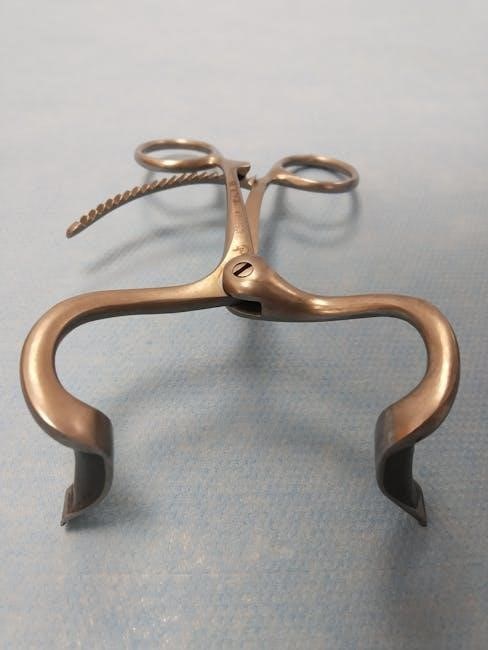
These PDF resources illustrate different retractor types – handheld, self-retaining, and specialized designs for specific anatomical locations. Visual aids demonstrate how retractors gently displace tissues and organs, creating and maintaining optimal surgical access. The documentation often highlights features like ratchet mechanisms for secure positioning and smooth edges to minimize tissue damage.
Understanding the nuances of each retractor, as presented in the PDFs, is crucial for efficient surgical procedures. Proper retractor placement, guided by the illustrations, reduces surgeon fatigue and improves visualization. The catalogs serve as valuable references for both experienced surgeons and veterinary students, ensuring appropriate instrument utilization.
Hemostatic Instruments
Hemostatic instruments, essential for controlling bleeding during surgery, are comprehensively illustrated in veterinary surgical instrument PDF catalogs. These resources, offered by companies like ASC and Rita Leibinger Medical, feature clear pictures and accurate names of various clamps, forceps, and occluders.
The PDF guides detail different hemostatic techniques and the corresponding instruments used. Illustrations showcase how instruments like Kelly clamps, Mosquito forceps, and hemostatic clips effectively compress blood vessels to achieve hemostasis. Detailed specifications, including sizes and materials, are also provided.
These visual aids are invaluable for veterinary surgeons and students alike, enabling proper instrument selection and application. Understanding the specific design features of each instrument, as depicted in the PDFs, ensures effective bleeding control and minimizes surgical complications. The catalogs serve as a crucial reference for mastering hemostatic techniques in veterinary practice.
Surgical Clamps and Occluders
Surgical clamps and occluders, vital for temporarily blocking vessels or structures, are thoroughly documented in veterinary instrument PDF catalogs. These resources, such as those from ASC and Rita Leibinger Medical, provide detailed pictures and precise names for a wide array of clamping devices.
The PDF guides showcase various clamp types – including Kelly, Halstead, and DeBakey clamps – alongside occluders designed for specific vessel sizes. Illustrations clearly demonstrate their mechanisms and appropriate applications during surgical procedures. Specifications regarding jaw design, length, and material composition are also included.

These visual references are incredibly beneficial for veterinary professionals, aiding in accurate instrument identification and selection. Understanding the nuances of each clamp and occluder, as presented in the PDFs, ensures secure vessel control and minimizes potential complications. The catalogs function as essential learning tools and practical references for veterinary surgical teams.
Surgical Drills and Saws
Surgical drills and saws, essential for orthopedic and reconstructive procedures, are comprehensively illustrated in specialized veterinary instrument PDF guides. These resources, often provided by manufacturers like ASC, feature detailed pictures and clear names for each instrument variant.
The PDF catalogs showcase a range of drills – including high-speed and low-speed options – alongside various saws, such as oscillating and Gigli saws. Detailed diagrams highlight key features like chuck types, blade materials, and ergonomic designs. Specifications regarding power requirements and cutting depths are also included.
These visual aids are invaluable for veterinary surgeons, enabling precise instrument selection based on the specific bone or tissue being addressed. Understanding the capabilities of each drill and saw, as presented in the PDFs, ensures controlled bone cutting and minimizes the risk of iatrogenic damage. The catalogs serve as crucial references for both experienced surgeons and veterinary students.
HF Surgical Instrument Compatibility
High-Frequency (HF) surgical instrument compatibility is a critical safety consideration, thoroughly documented in specialized veterinary instrument PDF guides. These resources detail how instruments interact with HF electrosurgical units, ensuring patient and surgeon safety.
PDF catalogs from manufacturers often include compatibility charts, listing specific instrument types and their suitability for use with various HF generators. Detailed pictures and names of compatible instruments are provided, alongside information regarding insulation standards and potential risks associated with incompatible tools.

Testing protocols, such as those adhering to IEC 60601 2-2 standards, are outlined, demonstrating the instrument’s ability to withstand HF energy without causing unintended burns or electrical hazards. These PDFs emphasize the importance of verifying compatibility before each procedure, preventing tissue damage and ensuring optimal surgical outcomes. Understanding these guidelines, visually supported by instrument illustrations, is paramount for veterinary professionals.
Instrument Materials and Sterilization
Veterinary surgical instruments are commonly crafted from high-grade stainless steel, ensuring durability, corrosion resistance, and compatibility with sterilization processes. Detailed PDF guides, often including pictures and names of instruments, specify the exact alloy composition for each tool.
Sterilization is paramount to prevent post-operative infections. PDF resources outline recommended sterilization methods – autoclaving, gas sterilization (ethylene oxide), and chemical sterilization – with specific parameters like temperature, pressure, and exposure time. These guides emphasize proper cleaning protocols before sterilization to remove organic debris.
Manufacturers’ catalogs, available as PDFs, detail material compatibility with various sterilization agents, preventing instrument damage or degradation. Visual aids, like instrument pictures, help identify tools requiring special handling. Proper sterilization, guided by these resources, maintains instrument functionality and safeguards animal health, ensuring a safe surgical environment.

Resources for Veterinary Surgical Instrument PDFs
Accessing comprehensive PDF guides detailing veterinary surgical instruments, complete with pictures and names, is crucial for both professionals and students. Rita Leibinger Medical offers a vast catalog – exceeding 15,000 instruments – available for download or perusal.
These PDF resources typically include detailed specifications, sizes, and features of each instrument, aiding in informed purchasing decisions. ASC’s catalog is another valuable source, showcasing scalpel handles, forceps, and scissors with precise descriptions. Online searches using keywords like “veterinary surgical instrument catalog PDF” yield numerous results.
Furthermore, manufacturers’ websites often host downloadable PDFs outlining instrument compatibility with HF surgical devices, adhering to standards like IEC 60601 2-2. These resources are essential for ensuring safe and effective surgical procedures, providing visual references and detailed information for optimal instrument selection and utilization.